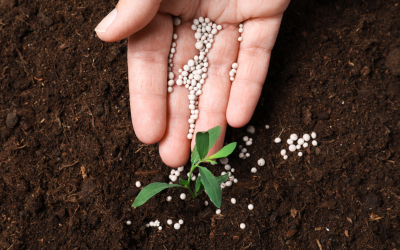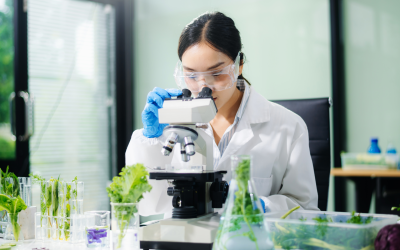
Sustainability is no longer simply a long-term aspiration for Singapore businesses. It is a practical, immediate, and commercially significant business priority. Across all industries, organisations are actively looking for smarter and more cost-effective ways to reduce organic waste, improve operational efficiency, and adopt measurably environmentally responsible practices. One of the most promising and commercially viable developments in this transformation is the ability to convert organic waste into valuable fertiliser using modern biotechnology.
For Singapore, where land availability is severely constrained, commercial organic waste generation remains high, and sustainability expectations are becoming increasingly demanding, this shift from disposal to recovery is particularly significant and timely. Rather than continuing to rely solely on conventional waste disposal systems, forward-thinking businesses are adopting smarter resource recovery strategies that systematically convert biodegradable waste into genuinely useful agricultural, horticultural, and commercial inputs.
This is where the modern organic waste to fertiliser system is changing the game.
The Problem with Traditional Organic Waste Disposal in Singapore
Organic and biodegradable waste is generated in substantial volumes every single day across commercial kitchens, hotels, restaurants, industrial food processing units, agricultural operations, and manufacturing facilities throughout Singapore.
Common categories of organic waste requiring management include:
- food scraps
- fruit and vegetable waste
- organic sludge
- plant residues
- biodegradable industrial by-products
Traditionally, the vast majority of this organic waste follows a simple and resource-inefficient route: collection from the business, transportation to centralised facilities, and disposal through incineration or conventional waste handling systems.
While operationally functional in the short term, this linear disposal model presents several significant and growing limitations for Singapore businesses.
Environmental Impact
Frequent organic waste transportation increases fuel consumption, vehicle emissions, and overall carbon footprint across the disposal supply chain.
Incineration, while effective at reducing waste volume, does not recover or preserve the embedded nutrient and resource value contained within biodegradable organic waste.
Cost Burden
Commercial organic waste disposal is a substantial and recurring operational expense that can significantly and negatively affect overall business efficiency and profitability.
Lost Resource Potential
Organic waste contains valuable nutrients, organic carbon, and biodegradable compounds that could be productively repurposed as fertiliser and soil amendments rather than wastefully discarded.
This fundamental inefficiency and resource waste is exactly why progressive Singapore businesses are shifting decisively toward circular sustainability solutions that recover value rather than destroy it.
Rethinking Organic Waste as a Commercially Valuable Resource
The core concept behind organic waste-to-resource innovation is straightforward in principle but commercially powerful in practice.
Instead of asking the conventional and limiting question:
How do we dispose of organic waste as quickly and cheaply as possible?
Progressive Singapore businesses are now asking the far more commercially productive question:
How do we systematically recover commercial and environmental value from organic waste?
Organic waste contains essential plant nutrients and biodegradable organic compounds that can be biologically processed and converted into genuinely useful outputs such as organic fertiliser and soil conditioning inputs.
Modern biotechnology makes this organic waste to fertiliser transformation significantly faster, cleaner, more consistent, and commercially viable at meaningful business scale.
This creates what is commonly referred to as closing the sustainability loop, a circular process where organic waste generated by one process becomes a valuable input for another.
What Is a Modern Organic Waste to Fertiliser System?
An organic waste to fertiliser system is a technology-driven solution that converts biodegradable waste into nutrient-rich fertiliser through biological processing.
Rather than allowing organic waste to become an avoidable environmental and financial burden, these systems purposefully and efficiently transform it into a reusable and valuable resource.
The complete organic waste to fertiliser conversion process combines:
- waste segregation
- controlled decomposition
- biotechnology-driven digestion
- nutrient stabilisation
- fertiliser recovery
Modern organic waste to fertiliser systems are specifically designed and engineered for operational efficiency, commercial scalability, and real-world business application.
For Singapore businesses facing rising disposal costs and sustainability expectations, this creates a highly attractive and practically deployable sustainability solution.
How Modern Biotechnology Powers the Organic Waste to Fertiliser Process
The critical difference between traditional composting approaches and modern biotech-driven organic waste to fertiliser systems lies in processing speed, scientific control, output consistency, and overall commercial efficiency.
Biotechnology enables businesses to process organic waste under precisely controlled scientific conditions rather than relying on slow, unpredictable, and space-intensive passive natural decomposition.
The key biotechnology approaches that power modern organic waste to fertiliser systems include:
Controlled Microbial Processing
Carefully selected specialised microorganisms significantly accelerate the biological breakdown of organic waste material beyond the rate achievable through natural decomposition alone.
These purpose-selected microbes digest organic waste components more rapidly and completely than uncontrolled natural microbial decomposition, delivering faster and more consistent processing results.
Benefits include:
- faster breakdown
- reduced odours
- improved output consistency
- scalable performance
Thermophilic Digestion Advantages for Singapore Businesses
Thermophilic biotechnology uses elevated temperature biological digestion to dramatically accelerate organic waste processing beyond what ambient-temperature systems can achieve.
Operating at controlled elevated temperatures significantly improves decomposition speed and thoroughness while simultaneously helping to eliminate harmful pathogens from the processed organic waste.
This results in safer, cleaner, and more commercially suitable fertiliser outputs.
Enzyme-Based Waste Breakdown
Specialised enzymes function as biological catalysts that precisely and powerfully speed up the decomposition of complex organic compounds.
These targeted enzymes act on specific organic compounds commonly found in food and industrial waste, including:
- proteins
- carbohydrates
- fats
- cellulose
This targeted biological action improves overall organic waste conversion efficiency significantly compared with non-enzymatic decomposition approaches.
Automated Biotech Waste Systems
Modern commercial-scale organic waste processing systems commonly include advanced automation capabilities covering:
- moisture monitoring
- temperature control
- biological environment regulation
- processing consistency
Automation directly reduces human labour dependency, minimises operational variability, and significantly improves overall system reliability and processing consistency.
Why Does Organic Waste Convert So Well into Fertiliser?
The reason organic waste converts so effectively into useful fertiliser is that biodegradable material contains nutrients that are fundamentally essential for healthy plant growth and productive soil.
Key plant nutrients commonly recoverable from organic waste through biotech processing include:
- nitrogen
- phosphorus
- potassium
- trace minerals
- organic matter
Instead of permanently losing these valuable nutrients through conventional incineration or landfill disposal, modern biotechnology enables systematic and efficient nutrient recovery.
The nutrient-rich organic fertiliser produced through biotech processing can directly and effectively support:
- landscaping
- horticulture
- agriculture
- urban farming
- green commercial projects
This dual commercial and environmental value makes the organic waste to fertiliser conversion process a compelling proposition for Singapore businesses seeking both sustainability performance and operational ROI.
Why Organic Waste to Fertiliser Innovation Matters Particularly in Singapore
Singapore presents one of the most commercially compelling and relevant cases in Southeast Asia for widespread organic waste to fertiliser innovation and adoption.
Limited Land Availability
Organic waste disposal infrastructure must operate within Singapore’s exceptionally strict and limiting land constraints, making on-site or decentralised waste processing solutions highly attractive.
Technology solutions that simultaneously reduce waste volume and recover commercially useful resources are especially strategically valuable for Singapore’s space-constrained environment.
Sustainability Commitments
Singapore’s government and business community continue to strongly prioritise green technology adoption, circular economy initiatives, and measurably responsible business practices as core strategic directions.
Commercial businesses in Singapore are increasingly expected and required to actively contribute to national sustainability goals through concrete operational improvements.
High Organic Waste Generation
Commercial food businesses, hospitality groups, institutional caterers, and industrial operations across Singapore collectively generate enormous volumes of biodegradable organic waste daily.
This high-volume organic waste generation creates a compelling and commercially strong use case for smarter, biotech-driven waste recovery systems.
Growing Urban Agriculture Interest
As local food resilience, urban agriculture, and Singapore’s broader food security agenda gain strategic importance, sustainable and locally produced organic fertiliser solutions become increasingly commercially relevant and valuable.
Commercial Business Benefits of Biotech Organic Fertiliser Solutions in Singapore
Businesses in Singapore understandably approach sustainability investments with appropriate commercial caution, particularly when capital expenditure is involved.
However, biotech-driven organic waste to fertiliser solutions offer clearly measurable and compelling operational advantages that deliver genuine commercial return.
Lower Waste Disposal Costs
Processing organic waste internally through integrated biotech systems reduces direct dependence on recurring and escalating third-party disposal services.
This operational shift creates significant and compounding long-term cost savings for Singapore businesses generating regular organic waste volumes.
ESG Performance Improvement
Documented organic waste reduction and resource recovery contribute measurably and positively to Environmental, Social, and Governance metrics, strengthening sustainability reporting.
This demonstrable ESG improvement directly strengthens investor confidence, stakeholder trust, and procurement relationships with sustainability-conscious clients.
Reduced Environmental Footprint
Lower organic waste transportation requirements, reduced reliance on energy-intensive incineration, and systematic resource reuse all directly and measurably improve overall sustainability performance.
Brand Positioning
Singapore’s consumers, corporate clients, and procurement decision-makers increasingly and actively favour environmentally responsible businesses that can demonstrate genuine sustainability action.
Demonstrable and verifiable sustainability initiatives, including organic waste to fertiliser programmes, strengthen brand perception and differentiation in competitive markets.
Resource Efficiency
Through biotech fertiliser systems, organic waste is fundamentally transformed from a recurring operational expense into a recoverable asset with measurable commercial value.
This transformation directly improves overall operational efficiency and changes the economics of waste management for Singapore businesses.
Industries in Singapore That Benefit Most from Enzyme-Based Waste Processing
Organic waste to fertiliser biotech systems offer strong and immediate commercial relevance across multiple sectors in Singapore’s business landscape.
Hospitality
Singapore hotels generate very substantial and predictable food waste volumes from in-house restaurants, room service operations, buffet services, and banquet and event catering.
Implementing biotech organic waste to fertiliser systems helps hotels reduce disposal burdens and costs while materially supporting and evidencing their sustainability commitments and ESG reporting.
Restaurants and Commercial Kitchens
Daily commercial kitchen food preparation creates entirely predictable organic waste streams that are well-suited to systematic biotech conversion into fertiliser.
Organic waste recovery systems create measurable operational efficiency for restaurants and commercial kitchens by reducing disposal frequency and associated costs.
Food Manufacturing
Rejected production batches, raw material residues, and biodegradable processing by-products from food manufacturing can all be systematically and profitably repurposed through organic waste to fertiliser systems.
Industrial Processing
Industrial processing businesses generating substantial biodegradable production waste benefit directly from structured, scalable resource recovery programmes.
Agriculture and Landscaping
Organic fertiliser recovered through biotech processing creates direct and tangible downstream commercial value for landscaping, agricultural, and horticultural applications.
Traditional Composting Limitations for Commercial Operations vs Modern Biotech Systems: Key Differences for Singapore Businesses
While composting has long existed as a broadly recognised sustainability practice, modern biotech organic waste to fertiliser systems offer major and commercially decisive advantages for Singapore’s business environment.
Challenges of Traditional Composting Limitations for Commercial Operations for Commercial Operations
- slower processing
- odour concerns
- inconsistent results
- large space requirements
- lower scalability
Advantages of Modern Biotech Organic Waste to Fertiliser Systems
- faster conversion
- controlled biological conditions
- cleaner processing
- better nutrient consistency
- commercial scalability
For businesses in Singapore, operational efficiency and space optimisation are especially critical given the island’s land constraints and high commercial real estate costs.
Closing Singapore’s Organic Waste Sustainability Loop
A genuinely circular economy depends fundamentally on keeping valuable biological and nutrient resources in productive commercial use rather than allowing them to be destroyed through disposal.
Biotech organic waste to fertiliser systems embody this circular economy principle directly and practically.
Through modern biotech processing, the organic waste cycle becomes:
organic input from food or industrial operations → organic waste generation → biotech processing and digestion → nutrient-rich fertiliser recovery → productive agricultural or horticultural reuse
This reduces:
- waste burden
- environmental impact
- resource loss
- disposal dependency
This closed-loop approach simultaneously creates measurable operational cost savings and significant sustainability value for Singapore businesses.
This practical and commercially beneficial cycle is what genuinely and meaningfully closing the sustainability loop means for Singapore businesses.
Future Outlook
As sustainability expectations and ESG requirements continue to rise, Singapore businesses will increasingly and inevitably move toward integrated, technology-driven resource recovery systems.
The near-term future of organic waste management in Singapore will likely include:
- smarter biotech automation
- decentralised waste processing
- wider adoption across industries
- stronger ESG integration
- greater circular economy participation
Singapore’s innovation-driven business ecosystem makes it particularly well positioned for this transition.
Final Thoughts
Organic waste in Singapore no longer needs to be viewed, managed, or budgeted as simply a disposal problem.
With modern biotechnology and advanced conversion systems, it becomes a genuine commercial and sustainability opportunity.
Advanced organic waste to fertiliser systems allow Singapore businesses to simultaneously reduce waste volumes, recover commercial value from biodegradable materials, improve measurable sustainability performance, and align meaningfully with future-ready environmental and ESG practices.
For Singapore organisations looking to intelligently balance operational efficiency with genuine and measurable sustainability action, biotech organic waste to fertiliser solutions represent one of the most practical, scalable, and commercially impactful innovations available today.
The organic waste sustainability loop is no longer theoretical or aspirational. It is already being practically built and commercially validated by Singapore businesses, one smart biotech waste solution at a time.